Sir Dadi Toka – The Man Who Dared to Have a Go

Some people leave their mark loudly. Others do it quietly, steadily, over a lifetime. Sir Dadi Toka belonged to the second kind. The kind whose influence you only recognise when you look back and realise how much of a city carries their imprint.
I first heard about him through my uncle, Udu Vai. He used to tell me stories from the colonial days, when young boys from the village would wander down to the golf course. Not to play, that world wasn’t open to them, but to work as caddies. Sir Dadi was one of those boys.
They spent long hours chasing golf balls across manicured lawns they weren’t allowed to step on as players, carrying clubs for men who barely noticed them. The pay was small, but for boys from Hanuabada and the surrounding villages, it offered something else entirely: a glimpse into another world.
Years later, Sir Dadi’s name surfaced again, this time much closer to home. I was in primary school then, sitting in the same classroom as his son, Dadi Toka Jr., who would later become Chairman of the Motu Koita Assembly.
Our families crossed paths often. My father and Sir Dadi worked together on various business projects, though many of their interactions were simpler than that – two friends sharing a beer. Their circle sometimes included another remarkable figure, Vai Reva, a senior banking executive and former PNG Ambassador to the Philippines.
As I grew older, curiosity pulled me deeper into Sir Dadi’s story. I began listening more carefully to conversations among elders, reading what little was written, and slowly piecing together a life that seemed impossibly large for one person to have lived.
What struck me wasn’t the positions he eventually held. It was how he began.
After his years on the golf course, he started working as a teaboy and cleaner at the Konedobu headquarters. From there, he became a native clerk. Then an inquiries clerk. Later, he moved into the PSA Savings and Loans Society.
Those roles might sound modest today, but in his time, each step represented a door only partly open to indigenous Papua New Guineans. Every promotion was earned against quiet resistance. Progress came slowly, and never by accident.
His leadership didn’t stop at office walls. He served as a local councillor, grounding himself firmly in community life. His influence grew not from the authority of titles, but from the trust people placed in him – trust built patiently, over time.
And then there were the sides of his life many people forget.
Sport, for one.
He didn’t remain on the sidelines. He became one of the country’s first indigenous golfers. He helped pioneer basketball in Papua New Guinea. He played rugby league for the Kone Tigers and later became the club’s first indigenous President, following the well-known Brian Rawsonoski. His vice-president was another familiar name – Joe Tauvasa.
I often imagine those early sporting grounds – dusty fields shaped by little more than determination. You can almost see him there: competitive, focused, unwilling to accept the limits drawn around him.
I also remember the Royal Papua Yacht Club in its earlier days, before it moved to its present location. My father was a member then, and the old Green Jade Restaurant remains vivid in my memory. When the club’s lease ended and relocation became necessary, it was Sir Dadi who helped secure the new land – a detail rarely mentioned, yet pivotal all the same.
Later, his interests expanded into business and property. He understood land not merely as investment, but as continuity – something to be cared for so the next generation could stand on firmer ground.
And then there was another side to him entirely.
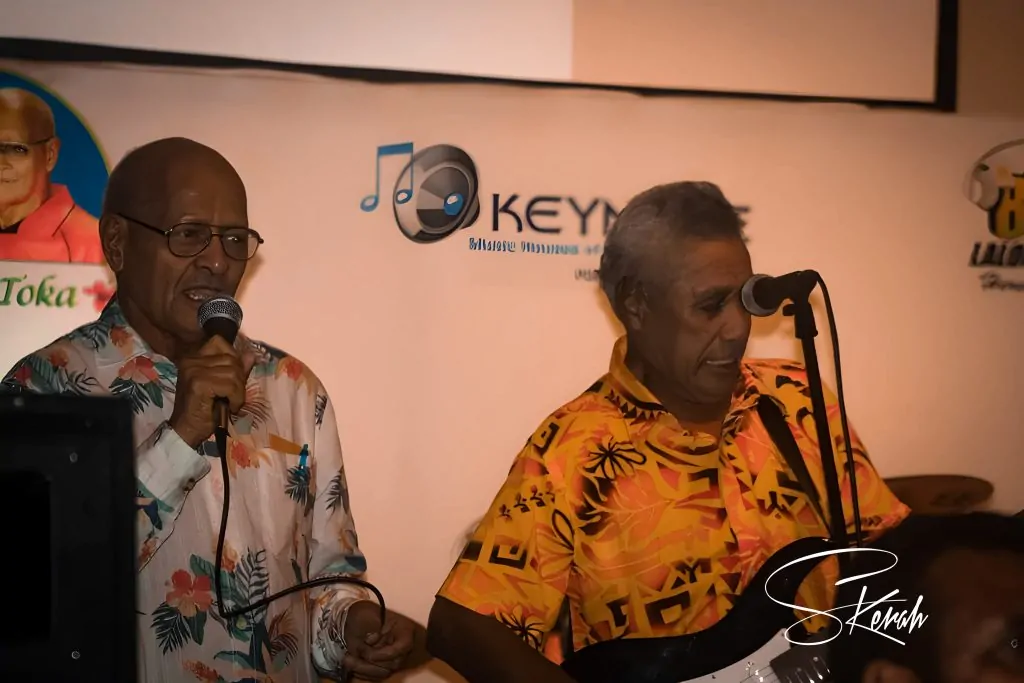
He was a singer.
At large social gatherings hosted by my father’s boss, Mick Larmer, the band Clockwork Orange would play as the evening unfolded. But there was always a moment when the microphone found its way to Sir Dadi. He would sing old Motuan melodies, songs full of memory and rhythm, and he sang them beautifully. The last time I heard his voice was at his 80th birthday, fittingly celebrated at the yacht club he had helped establish.
When you gather all these fragments – the caddy, the clerk, the councillor, the sportsman, the businessman, the singer – you begin to see how many versions of himself he had to become. His life moved through colonial rule, administrative service, independence, and into the modern Papua New Guinea he quietly helped shape.
It’s easy to summarise a life like his with words such as achievement, progress, resilience. But when I think of Sir Dadi Toka, what I see most clearly is possibility – the kind a person creates simply by refusing to stand still.
Through persistence, courage, and time, he grew into a man who helped build a nation’s own.