Sir Sinaka Vakai Goava

Inspiration has its own timing. It rarely announces its arrival. Sometimes it grows from the people closest to us. Other times it begins with an observation so ordinary you don’t realise, until much later, that you were watching greatness walk by.
I was in my early teens when I first noticed the old man who passed along our street almost every day. He walked with a steady rhythm, always carrying a briefcase or folder as if every step had purpose. His clothes were neat, his posture straight, and though the sun was often merciless, he chose to walk rather than drive. On some days, he would stop for a brief rest. We would exchange a few words, nothing profound, just the kind of small exchanges that linger for reasons you don’t fully understand at the time.
I didn’t know then who he was. I didn’t know what he had done, or the role he played in our country’s story. But I admired him instinctively, the kind of admiration that comes before understanding. Much later, I learned his name: Sir Sinaka Vakai Goava.
The Functions
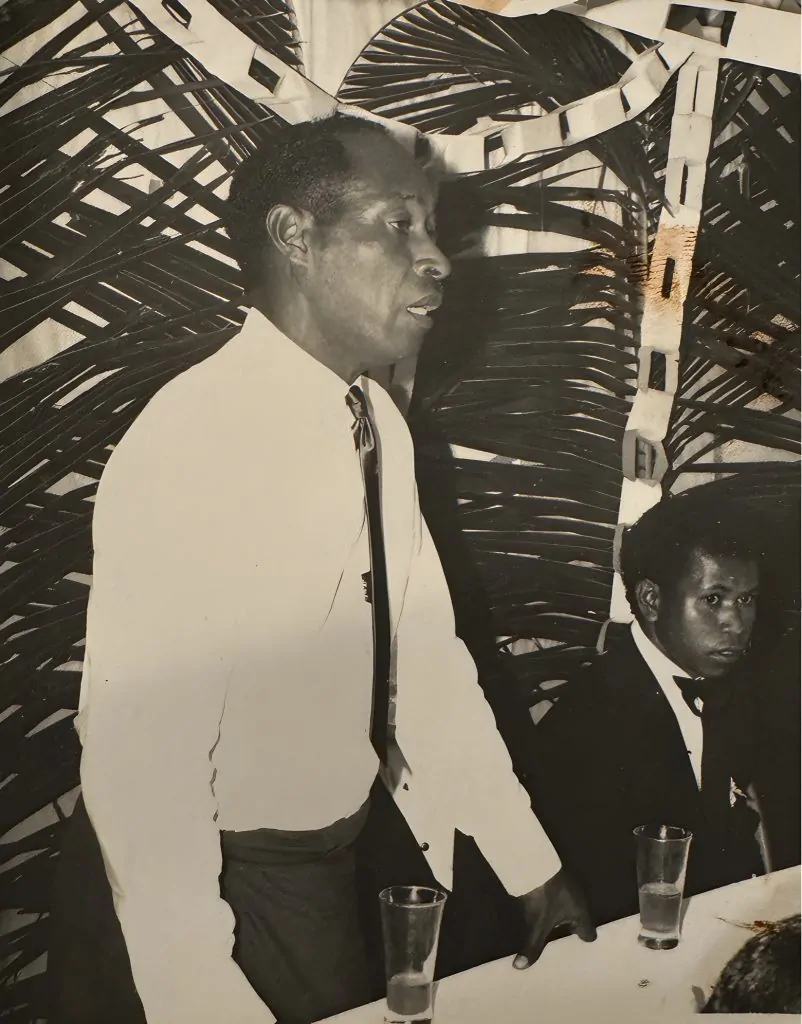
My father worked as the company secretary for Arman Larmer Surveyors, owned by the well-known surveyor and businessman Michael “Mick” Larmer. Mick had a reputation for his ventures in property but he was equally famous for his grand Christmas parties, the ones attended by Port Moresby’s business elite.
As company secretary, my father was often at the centre of organising those events. Which meant I, inevitably, found myself helping behind the scenes.
Among the regular guests were three men whose names would later become deeply etched into both my memory and the country’s history: Sinaka Goava, Mea Podi Vai, and Dadi Toka. Mick seemed to hold these three in unusually high regard. At the time, I didn’t understand why. But even then, I could sense they were different men with presence, men whose footsteps left quiet echoes.
Sir Mea stood with quiet strength.
Sir Dadi carried charisma that filled the room.
Sir Sinaka – he was thoughtful, articulate, and always ready for a conversation, especially after a drink or two.
In time, all three would receive knighthoods: first Sir Mea, then Sir Sinaka, and finally Sir Dadi.
A Traditionalist at Heart
What struck me about Sir Sinaka was how seamlessly he moved between two worlds. During the week, he was a public servant and leader. But on weekends, he returned to his cultural roots – fully, proudly, and without reservation.
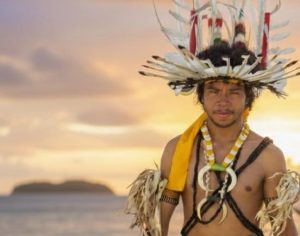
Outside their home, he and his wife Lady Naomi would host traditional dances. He would step out in full traditional attire, back straight, eyes bright, carrying the rhythm of his ancestors in every beat of the kundu. It wasn’t entertainment. It was connection to land, to lineage, to the long thread that ties past to present.
His love for tradition was matched only by his commitment to indigenous land rights. He wasn’t just an advocate; he was one of the strong voices that shaped Papua New Guinea’s conversations on customary land. His name frequently appears in old land records and historical accounts – always connected to justice, always standing on behalf of his people.
The Fight for Justice
Sir Sinaka’s public achievements were one thing but his personal story held its own power.
His father, Goava Oa, was wrongfully imprisoned for years, a painful injustice that would have suffocated many families. But Sinaka Goava did not give up. He fought to clear his father’s name, a struggle documented in Crossroad to Justice. It is a story of perseverance, family loyalty, and moral courage – qualities that seemed to shape every part of his life.
Only later did I realise how much of this strength I had glimpsed, unknowingly, in those early sidewalk encounters. He walked with purpose because he lived with purpose.
Looking Back
In hindsight, I understand why I admired him long before I knew his name. He embodied a kind of leadership that doesn’t announce itself. A leadership that walks instead of boasts, listens instead of shouts, and remembers instead of forgets.
He carried himself with a dignity shaped not just by titles or accolades, but by lived experience, the sort of integrity that doesn’t crumble under scrutiny. He could stand in a boardroom just as comfortably as he could dance in full traditional regalia. He was rooted, yet progressive. Soft-spoken, yet unshakeable.
Even now, when I recall his face, I don’t think first of his knighthood or his public roles. I think of those quiet moments – him walking up the hill, pausing to catch his breath, sharing a few words with a curious teenager. Small moments that stayed with me long enough to make sense years later.
Sir Sinaka Vakai Goava walked the long road, literally and figuratively, with a sense of purpose that needed no explanation.
And for those of us fortunate enough to have crossed paths with him, even briefly, the imprint remains.