What’s Cooking with Hera Pala

When it came to cooking, my Aunty Hera was in a league of her own. She wasn’t simply good, she was trained, polished, and precise, the kind of home economist whose dishes carried both technique and heart. A teacher by profession, she specialised in Home Economics, and everything she touched in the kitchen reflected that background.
Her husband, my Uncle Nakula Pala, was also a teacher, often serving as deputy principal or principal at the schools where they lived and worked. Because they were posted around the country, I was lucky enough to visit them in many of those places. My very first plane trip was to Alotau, where they were teaching at the time. It was my first time away from home, and their house – warm, tidy, full of comforting smells – made the experience unforgettable.
There were other postings too: Redscar High School at Porebada, Badihagwa Secondary at Hanuabada, and Kila Kila Secondary in Port Moresby. No matter where they lived, the constant was the same: hospitality. Whenever I visited, Aunty Hera made sure I was well fed. From the simplest snacks to full meals, everything she prepared carried that extra touch – a quiet confidence that came only from years of training and an instinctive love for cooking.
One of my favourites was her banana and sago porridge. It tasted like something old, something rooted, and I’ve never come across anyone who could make it the way she did. She also had a deep love for traditional dishes, and she prepared them with the same care she gave to everything else.
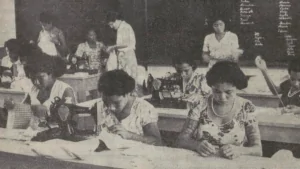
What I didn’t realise until much later was that she had actually studied Home Economics abroad. In 1965, she was chosen as one of 16 recipients from the South Pacific Commission to undergo training in Fiji. Three other Papua New Guineans were selected alongside her: Nahau Kambuou, Konio Gabe, and Dibura Samuel. It was a prestigious opportunity at the time, and she carried that knowledge home with her for decades.
Her three children Konio, Tau, and Kilaura inherited her open-door warmth, even though only Konio followed her into teaching. Hospitality simply ran in the family.
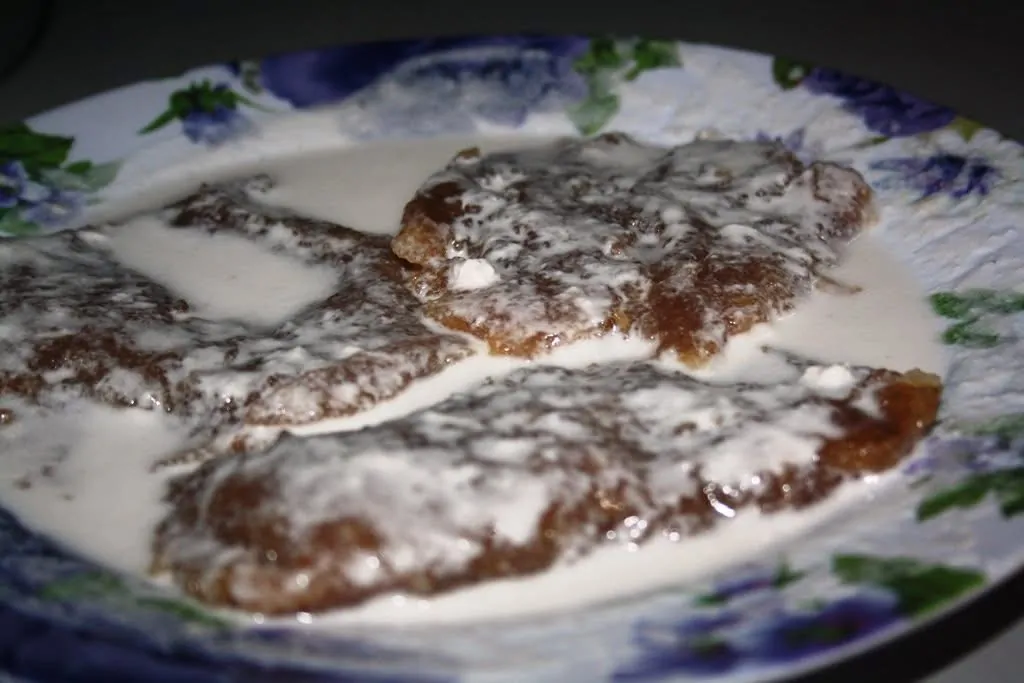
But the memory that surprised me most came from an unexpected source: a newspaper article. It was rare in those days to see Papua New Guinean recipes published in the local paper. Yet there she was, Aunty Hera, sharing her recipe for Bariva. Some call it Pariwa, but in Motu, we call it Dia. It’s one of my favourite traditional sweets, and until then, I didn’t know she had documented it.
Most traditional recipes live in people, not books. They are passed down through demonstration and repetition by watching hands, listening to instructions spoken casually over the sound of a fire, and learning through doing. But that day, in newsprint, she had captured one of our traditional flavours with exactness.
Here is the recipe she shared.
Hera’s Bariva (Dia)
Ingredients
- 1 cup sago
- 2 ripe bananas
- 2 banana leaves
- String for tying
For Ketara (Coconut Cream):
- 2 cups shredded coconut
- 1 cup water
For Dia (Coconut Oil):
- 2 cups shredded coconut
- 1 cup water
Method
- Mix sago and ripe bananas in a bowl.
- Cut banana leaves in half and divide the mixture into four equal parts.
- Wrap each portion neatly into a rectangle.
- Tie securely – both lengthwise and crosswise.
- Boil for 10-15 minutes.
- Remove the leaves and serve warm with Ketara or Dia.
To Make Ketara:
- Combine shredded coconut and water.
- Squeeze thoroughly.
- Strain through a clean tea towel to extract the cream.
- Bring the cream to a boil until a thick layer forms.
To Make Dia:
- Prepare coconut cream as above.
- Boil gently and stir until it breaks into oil.
- Strain and store.
Every time I think of Bariva, I think of her – standing in a simple kitchen somewhere in Papua New Guinea, tying banana-leaf parcels with practised hands, the steam rising from the pot, the room filling with the soft scent of sago and banana.
Her cooking was more than food. It was the way she welcomed you, the way she nurtured connection, the way she kept traditions alive without ever calling it that.
In every home she lived in, her kitchen was the heartbeat. And through her dishes, she created memories that have lasted far beyond the meal itself.