Walk Upright With Unbroken Will

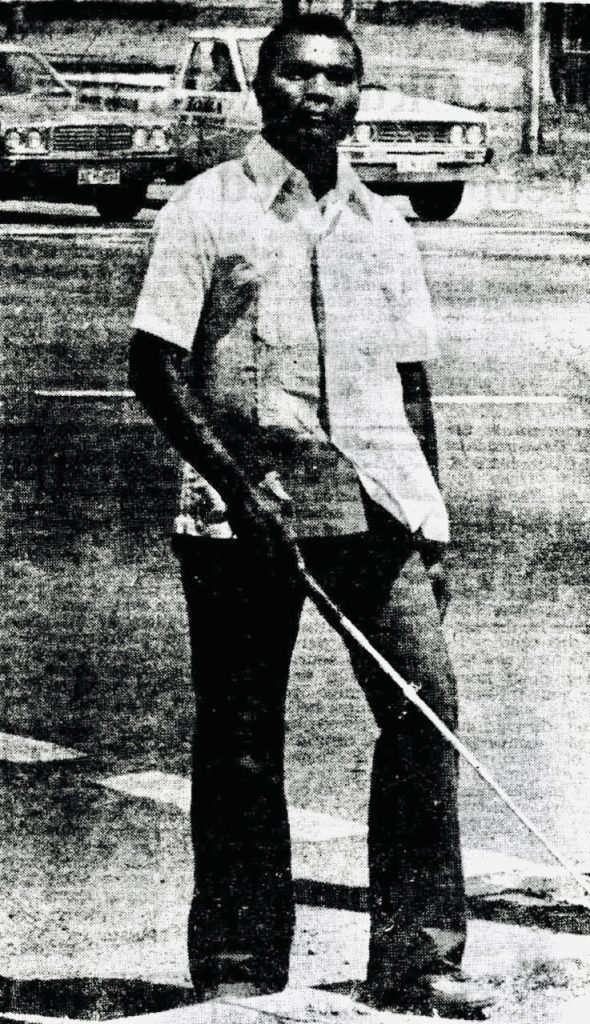
In the spirit of Christmas, I want to share a story I came across on this Christmas Eve. At first, I found it deeply sad. Then, unexpectedly, I found it inspiring. It is the story of Hekoi Igo.
Back in the 1980s, my father used to drive me to school every morning. In the afternoons, I would sometimes catch a PMV bus owned by my mother. It was called Egwano. Almost every day along Boe Vagi Road, I would see the same pair – a man and a woman, walking steadily together. I might have seen a lady on a wheelchair too.
It was obvious to me, even as a child, that the man was blind. He carried a white stick, and at times the woman gently guided him. What stayed with me was how he walked – upright, chin raised, unhurried. My father once explained that the man had lost his sight after drinking something bad. That was all I knew then.
Years passed.
Last year, while going through old newspapers, I stopped mid-page. I recognised him instantly. The man I used to see walking to and from Konedobu every weekday had a name. And his story had been told.
This is how it appeared in print (Post Courier):
He had gone out one Tuesday evening with his cousin brother to a Port Moresby hotel for a few beers. On returning to the village, a friend asked him to go on for a few more drinks at a place called Taora. He was already intoxicated and did not realise until the next day that one of his friends had died after drinking a poisonous substance. That was when he understood he had consumed it too.
That night, Hekoi Igo lost his sight.
That was the sadness I felt first.
But the story does not end there.
His disability did not stop him from living a useful, meaningful life. In fact, I had unknowingly witnessed that truth every morning on my way to school. What I did not know then was how far his determination would take him.
In 1980, Igo travelled to the Royal Blind Society of New South Wales in Sydney. There, he learned how to walk independently, use a white cane, shop for himself, and cross busy traffic. Even reading that now feels extraordinary.
His attitude at the Centre was so positive that his progress was published in the Post-Courier. Behind that opportunity was another remarkable individual – Iris Sampson. Mrs Sampson, herself blind, went from office to office, persuading business leaders until she raised enough funds to send Igo to Sydney.
Before the accident, Igo had been a high school student at Badihagwa, with a promising future. One decision altered the course of his life, but it did not define its limits. He learned braille and later took up employment as a switchboard operator with the Department of Primary Industry.
That may well have been where he was heading each morning while I was on my way to school.
And if that were not achievement enough, there is more.
Hekoi Igo was also an athlete. Alongside Marere Ivaharia, both competed in the National Blind Championships, a reminder that his life was not shaped by limitation, but by participation and courage.
What moved me most, though, was this: in every account I read, he was never alone. There was always family beside him. Supporting him. Walking with him. Perhaps the woman I saw guiding him along Boe Vagi Road was family too. I do not know. But I do know that he never walked that road unsupported.
There’s a clear message there isn’t it. Walk upright, chin lifted, guided by faith, family, and an unbroken will.